Electra Sign Ltd. recently completed the fabrication and installation of LED-lit channel letters for The Menopause Practice, located at 1086 St. Mary’s Rd in Winnipeg.
 This project was especially meaningful for our team because it continued a working relationship with the professionals behind Body Measure Inc., a business we had collaborated with previously. Being trusted again for a new venture is always something we value.
The Menopause Practice is a private Winnipeg clinic focused on supporting women through perimenopause, menopause, and hormonal health transitions. Founded in collaboration with hormone specialist Annabelle Reimer NP and the team behind Body Measure Inc., the clinic provides personalized care designed to help women maintain long-term health, wellness, and quality of life.
For the exterior signage, the goal was to create a clean and approachable look that aligned with the clinic’s modern branding and welcoming environment. The finished sign features illuminated channel letters and a custom logo icon designed for strong visibility both during the day and at night along the busy St. Mary’s Road corridor.
Healthcare and wellness signage often requires a careful balance between professionalism, visibility, and warmth. The final installation reflects those qualities while helping establish a strong visual presence for the clinic within the community.
At Electra Sign Ltd., we appreciate every opportunity to continue building long-term partnerships with local businesses and organizations throughout Winnipeg.
.jpg&w=650&h=450)
When businesses are set farther back from a busy roadway, visibility becomes a major part of the customer experience. A well designed monument sign can help direct traffic, improve tenant recognition, and elevate the overall appearance of a commercial property at the same time.
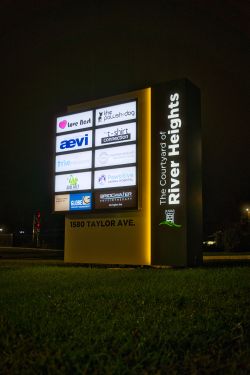 For Courtyards of River Heights at 1580 Taylor Ave. in Winnipeg, the goal was to create more than a standard tenant directory. This custom LED lit monument sign was designed to give the property a stronger visual presence during both daytime and nighttime hours while keeping the layout clean and easy to read.
The sign features illuminated tenant panels paired with a bold vertical architectural element that helps the structure stand out from passing traffic along Taylor Avenue. Warm integrated lighting adds visibility after dark while complementing the modern look of the development.
Projects like this highlight how commercial signage can become part of a property's identity rather than simply functioning as a list of tenant names. The result is a sign that improves wayfinding while contributing to the overall presentation of the site.
This monument sign was fabricated and installed by Electra Sign Ltd. in Winnipeg, Manitoba.
See more of our signage projects at:
Electra Sign Ltd.
Winnipeg monument sign, LED lit monument sign, commercial signage Winnipeg, tenant directory sign, illuminated plaza sign, custom pylon sign, Taylor Avenue signage, wayfinding signage Winnipeg, property signage, Electra Sign Ltd.
.jpg&w=650&h=450)
Electra Sign Ltd. fabricated and installed custom LED-lit channel letter signage for ProActive Massage Therapy at 567 St. Anne’s Rd in Winnipeg, MB.
 While the finished signage appears clean and straightforward, projects like this often involve thoughtful refinements behind the scenes. When translating a logo into illuminated channel letters, certain design elements sometimes need adjustment to maintain readability, balanced illumination, and long-term fabrication performance.
For ProActive Massage Therapy, subtle refinements to portions of the logo helped preserve the personality of the brand while improving visibility from the street during both daytime and evening conditions. The darker outlines and clean white LED illumination created strong contrast against the building’s warm exterior finishes, helping the storefront stand out without feeling overly bright or aggressive.
The signage also reflects the atmosphere ProActive Massage Therapy aims to create for clients. Their clinic focuses on honest treatment, supportive care, and helping people move and feel better in a welcoming environment. Carrying that approachable feeling into the exterior branding was an important part of the overall project.
In addition to the building signage, the project also included updated illuminated pylon signage for the property, helping improve visibility for both vehicle and pedestrian traffic along St. Anne’s Road.
Projects like this are a good example of how effective signage combines branding, lighting, fabrication, and architectural integration into a single finished product.
Electra Sign Ltd. is proud to continue designing, fabricating, and installing custom commercial signage solutions throughout Winnipeg and Manitoba.
See more projects at:
Electra Sign Ltd. News Page
To directly speak with a representative, call:
Winnipeg204.452.6168